Sunday, July 11, 2021

No Children Allowed So ......

 We knew from family history that John Keohane eventually went to work for the Boston Elevated Railway. We have seen from his WWI draft registration that he was in Belmont living and working at McLean Hospital in 1917. Then we learn from his marriage registration that he was living in Brighton and working for the Boston Elevated Railway by 1918.

A quick word about the Boston Elevated Railway. Boston is the birthplace of American mass transportation - it emerged in the city in 1631. At that time Boston was a peninsula connected to the mainland by a narrow strip of land called Boston Neck - that strip is now the South End. Because there were no bridges and only limited access to the mainland, it was a 2 day journey to haul goods by ox cart from Chelsea to Boston - merchants would have to travel through Malden, Cambridge, Brighton, and Roxbury. Residents could travel within the city but rarely traveled outside the city boundaries because they could not afford horses or wagons. As Boston grew, landfilling projects began, and bridges were built to surrounding towns. A stagecoach operated between Cambridge and Boston and later between Boston and other New England cities. An omnibus operated within the city - it was larger than a stagecoach and the seats were lengthwise along the sides of the bus instead of horizontal. 

https://bostonintransit.com/collections/coaches-omnibuses-horse-drawn/products/omnibus-in-downtown-boston-circa-1860s-70s

In 1865 the first horsecar line ran from Central Square in Cambridge to Bowdoin Square (near the present City Hall Plaza) in Boston. Tracks had been laid along the streets, and horses pulled the coaches along the tracks. Omnibuses could go anywhere even in winter, but horses could haul larger or heavier loads of passenger in coaches more smoothly and comfortably over rails. At one point the West End Street Railway, which consolidated all the horsecar lines, had 8,000 horses.  


The first electric streetcar line in Boston began operation in 1889. Soon the city became clogged with streetcars. The Boston Elevated Railway Company was founded to build a network of suburban elevated railway lines. I was surprised to learn that J. Pierpoint Morgan was the founder of the company and owned half the stock; the remainder was owned by the Kidder Peabody Company. New surface routes were established and new carhouses and terminals were built.  One of these was the Watertown Square to Harvard Square route. We don't know if John Keohane was hired for this line or if he started work on some other line of the Boston Elevated Railway and then was transferred to it.

I found a picture of a self-propelled center-entrance car in Watertown - it is a double-ended streetcar that can be driven from either end. I don't know if this is what John Keohane was driving but it might be!! That looks like Lewandos on the right.


My mother said John Keohane had found the apartment in Newton Corner, but he did not know that they could not have children in the apartment. She said he and Ma were not there long before they found an apartment at 17 Adams Street in East Watertown.


I frequently drove by 17 Adams Street - or what I think was #17. The house had no number on it either. It was at the far end of a driveway. There was another house closer to the street that did not have a number on it. They must have been nice houses back in the day. The following two pictures are among the many pictures I had taken - the rest were lost when my old computer died.

These pictures are from May 1979. I love the old detail on the house.


The building below in the back is the above house - it now has siding.


Below is a picture of the house out front which now says it is #11 Adams Street.

The red icon on the left shows 17 Adams Street as the building in the back. Adams Street runs from Mount Auburn Street to Nichols Avenue. It is a couple of blocks from Coolidge Square.


The 1920 US Census for part of Precinct 2 in Watertown is taken on January 13 & 14. John and Margaret Keohane are renting apartment 3 at 17 Adams Street. He is 30 and she is 25. He has taken out papers for naturalization; she is an alien. They both immigrated in 1912. John Keohane works as a motorman for the Street Railway. They both speak English.


Shortly after the census was taken, Jim Keohane was born. The birth certificate that I found online at www.familysearch.org is a little different: 

 The Commonwealth of Massachusetts 
Office of the Secretary                #184
Division of Vital Statistics            Watertown
Canvasser's Return of A Birth

Place of Birth: St. Elizabeth's Hospital, Boston, Suffolk County 
Registered #55
Name of Child: James Patrick Keohane
Sex of Child: Male    Not a twin    Born alive    DOB: Feb. 4, 1920
Father: John Keohane - 17 Adams St., Watertown - White - 30 years            old - Birthplace: Co. Cork, Ireland - Occupation: Motorman
Mother: Margaret Moriarty - 17 Adams St., Watertown - White - 25 years old - Birthplace: Co. Kerry, Ireland - Occupation: Housewife
Attendant at birth: Joseph Stanton - Physician or midwife: Physician - 520 Beacon St., Boston - Personally attended birth: Yes
Informant: Margaret Keohane - 17 Adams St., Watertown - Mother
Name of canvasser: Louise Clark                                   Filed: Jan. 17, 1921
Date return was obtained: Jan. 17, 1921            Wm P McGuire
                            

It is interesting that the form states that the return was obtained January 17, 1921 - did Louise Clark come out and ask Ma about the birth? Did Louise Clark obtain the information from St. Elizabeth's? What was the story?

I remember going to St. E's when I was a kid - one of my aunts was probably having a baby, and children weren't allowed to visit. We would be outside with my father probably - rolling down the grassy slopes on the Cambridge Street side. 

This looks like where we would be rolling down the grass - we'd stop before falling off the wall on Cambridge Street.

My family has used and continues to use the facilities at St. Elizabeth's. My PCP is at St. E's - I have had surgeries there. I did a clinical rotation at St. E's when I was in nursing school at Boston College, and I worked there a couple of times during my working career. 

The website - 
https://www.semc.org/article/St-Elizabeths-Medical-Center-celebrates-its-100th-anniversary-in-Brighton#:~:text=The%20hospital%27s%20roots%20date%20back,in%20the%20field%20of%20gynecology. - 
reports that:

"The hospital’s roots date back to 1868 when five Catholic women started St. Elizabeth’s Hospital to care for sick immigrant women and as a place of shelter for retired and feeble women in domestic service."  It started out in downtown Boston.


My mother said the landlord of 17 Adams Street died while Ma was at St. E's having Jim. John Keohane never told Ma until she came home. My mother said Ma was very upset - maybe she was afraid a new landlord would not want to have children in the apartment. The neighbors in #17 Adams Street were Irish, Scottish, Sweden, American, Canadian. My mother said one of the woman in the building was very good to Ma.

I suppose Ma was in a ward like this when she had Jim.

I went down to the Sacred Heart Church in East Watertown and obtained Jim's Baptismal Certificate on October 14, 1998. James Patrick Keohane, child of John and Margaret Moriarty, was born 4th February 1920 and was baptized on the 22nd day of February 1920 by Reverend Richard Rogers. Sponsors were Martin McHugh and Helen Moriarty. Father Paul McEntee signed the certificate.

We saw Martin McHugh before - he was a witness for John Keohane and Ma's wedding. My mother said he was a brother-in-law of John Keohane's cousin. I guess I never asked what cousin!!


Remember that Sacred Heart is one of the churches where Father McDonough had his healing services.


"1893 - 1993
"This Church building stands as a monument to the people - to their faithfulness, their unswerving loyalty and devotion. And it is a sacred place where they worship their God and pray together as a community. It is to these people of Sacred Heart Parish, the founders, builders, supporters, worshippers, workers, those enjoying eternal glory with their God and those still on their journey of faith or struggling with it, that this edifice is rededicated."


John and Jim Keohane

Ma and Jim Keohane

Jim Keohane


John and Jim Keohane

John Keohane is still working as a motorman for the Boston Elevated Railway. My mother and my aunt Hannie said that their father drove the streetcar back and forth from Harvard Square to Watertown Square. When he passed Adams Street at 10 or 11 pm, he rang the bell so his family would know he is passing. The trolley travels back and forth on one rail and has a steering wheel and controls at each end. When he reaches each Square, he flips the back of the passengers' seats so they face the opposite direction, and he drives the trolley from the opposite end of the car. We had his hat for years that we kept with the Halloween costumes - I don't know where that ended up.

Years ago - in the late 70s and in the 80s - I spent hours at the National Archives in Waltham looking up passenger lists for John Keohane and Margaret Moriarty and their families - I didn't have any dates at the time and just scrolled through roll after roll of microfilms until I found them. Then I was scrolling for naturalization papers. I did find John Keohane's Petition for Naturalization - I have a copy of it right here beside me. John Keohane signed it in 1920. When the records finally came online, it made research so much easier. But I still never found John Keohane's Declaration of Intent to become a United States citizen. Until this morning - 10 July 2021. I was looking up his Petition on www.ancestry.com to download it into this blog - because the copy I have is too big to scan - when I found the Petition and then the Declaration. I am going to include a bit of the Declaration in this blog but will have to go back to the previous blog post and include it there. 
On the Declaration John Keohane reports that he is a teamster living at 259 Portland Street in Cambridge! This is where his brother Tom Keohane and his wife were living in the 1920 US Census! John Keohane signs the Declaration on 5 April 1918. We have already seen that John Keohane was living on Brackett Street in Brighton when he got married in September of 1918. So did he live in Cambridge at some point with Tom or did he just use Tom's address in case he moved? We may never know.


John Keohane petitions for naturalization on 24 September 1920. According to the petition, he is living at 17 Adams Street and still working as a motorman.  He lists his birth date as 10 December 1889 (which we have seen is the day he was baptized), and he was born in County Cork, Ireland. He emigrated from Queenstown, Ireland on or about the 16th day of April in 1912 and arrived in the port of Boston, Massachusetts on the 25th of April 1912 on the vessel Laconia.
"I declare my intention to become a citizen of the United States on the 5th day of April 1918  in Boston, Mass in the US District Court of Mass Dist(rict.) I am married. My wife's name is Margaret; she was born on the 18th day of March 1894 in Ireland and now resides with me. I have one child James P. born February 4 1920 in Boston, Mass and lives in Watertown, Mass."
John Keohane renounced absolutely and forever all allegiance and fidelity to George, King of Great Britain and Ireland. He has resided continuously in the United States for the term of five years at least since 25th day of April 1912 and in the state of Massachusetts continuously since 25th April 1912. 
The petition was signed John Keohane.  Declaration of Intention No. 78455 filed 24th day of September 1920. 
Then John Keohane signs an affadavit that the above information was true.  
Charles Hogan, teamster, residing at Cambridge, Massachusetts and David Cosgrove, teamster, residing at Waverly, Massachusetts depose and say that John Keohane is a citizen of the United States of America, that he has personally known said Keohane to have resided in the United States continuously since 1914 and in the state continuously since 1914 and that he has personal knowledge that the said petitioner is a person of good moral character, attached to the principles of the Constitution of the United States, and that the petitioner is in every way qualified, in his opinion, to be admitted a citizen of the United States. 
Signed by Charles Patrick Hogan and David Cosgrove 24 September 1920 in the office of the clerk of said court at Boston, Mass. The petition is signed by Thomas A. Gilling, clerk.


We know Charlie Hogan is John Keohane's cousin - Charlie's mother was Ellen Pierce - Ellen was a sister of Mary Pierce - mother of Patrick Keohane, John's father - in other words Mary Pierce was John Keohane's grandmother. Charlie Hogan was the cousin who had been trying to find John Keohane a wife.

So who was this Dave Cosgrove? He swore that he knew John Keohane since 1914 - is that when John Keohane left Hood Farm in Lowell to work on the farm at McLean Hospital in Belmont? I did a search on www.ancestry.com with just Dave's name and Waverley, Massachusetts. Bingo! I found his WWI draft registration.

His registration card lists his serial number as 561. His name is David Cosgrove. His address is McLean Hospital, Belmont, Middlesex, Massachusetts. He is 33 years old  - he was born December 31, 1884. He is white - he is a naturalized citizen. He is a farm teamster at McLean Hospital, Pleasant (?St.), Belmont, Middlesex, Mass. Nearest relative is Mrs. Elizabeth Clark, 845 Fenno, Revere, Suffolk, Mass. Dave signs the form verifying that the information is correct. 
Page 2 tells us that Dave is tall, slender build, blue eyes, dark brown hair, no physical disabilities. Kate Field is the Registrar - the date is Sept. 7, 1918. Local Board Division 31.


So I guess Dave Cosgrove may have worked with my grandfather at McLean's.

I'd like to know about Dave Cosgrove because my mother told me that Aunt Nellie and Aunt Hannah together saw him at Park Street in downtown Boston, and they called him a "bum". I don't imagine he was a bum when he stood up for my grandfather's naturalization. But we'll come back to Dave.

I checked the 1919 thru 1923 Watertown Directories, and the Keohanes are only listed in 1921. There is no directory for 1920.  "Keohane John (Margaret) motorman h 17 Adams."


The next event to occur is my mother's birth. The birth registration is the same form as Jim's. My mother is registered #432. Ellen Mary Keohane was born at St. Elizabeth's Hospital in Boston - she was female - not a twin - born alive on Sept. 14, 1921.
Her father is John Keohane residing at 17 Adams Street in Watertown. He is white - 31 years old - was born in Co. Cork, Ireland - and works as a motorman.
Her mother is Margaret Moriarty residing at 17 Adams Street in Watertown. She is white - 27 years old - born in Co. Kerry, Ireland - and her occupation is housewife.
As with Jim, Dr. Joseph Stanton was present at Ellen's birth. He is still at 520 Beacon Street in Boston. And again Margaret Moriarty was the informant. The canvasser was Ethel E. Osborne who obtained the return on Jan. 20, 1922. It was filed the same day. It looks like Wm. McGuire was again the Registrar.


Ellen Keohane 

I went down to Sacred Heart Church to get a copy of my mother's Baptismal Record. It listed James Moriarty as Godfather - he was Ma's brother who had stopped in Boston on his way to his cousins in Chicago. Ellen Keohane was my grandfather John Keohane's sister.


"Certificate of Baptism
Sacred Heart Church
770 MP/(Mt) Auburn Street
Watertown, Ma 02172-1315

This is to Certify
That Ellen Marie Keohane
Child of John
and Margaret Moriarty
born in 
on the 14th day of September 1921
was Baptized
on the 2nd day of October 1921
According to the Rite of the Roman Catholic Church
by the Rev. Richard Rogers
The Sponsors being James Moriarty and Ellen Keohane
as appears fro the Baptismal Register of this Church.
        Dated October 14, 1998
                        Rev Paul H McEntee
            Pastor"


Jim in a knit suit.

Jim in the same suit outside.

John Keohane took the oath of allegiance to the United States on 20th February 1922 and became an American Citizen. Ma became a citizen when John Keohane did.
At the bottom of the page it is difficult to read but my mother, Ellen Keohane, was added to the form - she was born September 14, 1921 in Brighton, Ma and resides with John. 


Below is the index to John Keohane's naturalization.


I have John Keohane's original Certificate of Naturalization - Hannie gave it to me years ago. My mother's name isn't on it. It is so wide that it was too big for the scanner, but here it is. Below it, is the copy that I scanned with my cellphone.


Original Keohane family portrait - Ma holding Jim - John Keohane holding Ellen.


I enlarged the family portrait for a closer look at their faces and tried it in black and white.

I don't remember why Ma and my grandfather moved to Belmont - maybe to save money to buy a house? But move they did. And that is for the next chapter!


A copy of this picture was hanging in the cottage in Ballythomas, Dunderrow, Kinsale.

Before we move on, let's just follow up on Dave Cosgrove - the witness for John Keohane's naturalization papers.

The 1920 U.S. Census lists Dave as a 35 year old single farm laborer for McLean Hospital. He and his parents were born in Ireland. He immigrated in 1904 and was naturalized in 1913. 


I was interested to see where Dave came from so I searched for his passenger listing, and I found it. He sailed on the SS Saxonia from Queenstown on 11 May 1904 for Boston. No date of arrival given.  He is on line 28 - his contract ticket # is 18801. He is 18 and single - he is a laborer - he reads and writes - he is of Irish nationality - he is from Ballymookera - he is going to Revere, Mass - he has a ticket to his final destination - his uncle paid for the ticket - he has $5 - he has never been in the US before - he is joining his uncle Patrick Clarke at  405 Fenno St., Revere - he is in good health and is not deformed or crippled.


I have never heard of Ballymookera, but I know there is a Ballymakeera in the Gaeltacht area of County Cork near Ballyvourney. Perhaps this is where Dave came from. I tried looking him up in the 1901 Irish census - there were 3 David Cosgroves aged 16 in Cork, but I don't know if our Dave is one of them.

From the name and address of Dave's uncle in Revere, which we just saw in the ship's passenger list, I was able to find Patrick Clarke and his wife Elizabeth in the 1920 census at 405 Fenno Street. Patrick is a 51 year old farmer who immigrated from Ireland in 1895 and has taken out papers for naturalization. His wife Elizabeth is 50 years old and was born in Ireland. They own their home and have 5 children living with them as well as a boarder. Their daughter, who is also Elizabeth, is a 20 year old grammar school teacher.


With this information from the census, I'm sure this is the Mrs Elizabeth Clarke listed on Dave's WWI draft registration.  

I used all the information so far to find his naturalization index and then his Declaration of Intent to become an American citizen. It is a little difficult to read in places, but the index says that Dave was living at 405 Fenno St. in Revere. He was born December 31st, 1884 in Co. Cork, Ireland. He is a milkman. He is unmarried. He was admitted as a citizen April 21st, 1913. Petition #7234. The Declaration provides the same information.


I searched a little further and found out that several of Dave's brothers came out from Ireland to him in Revere when he was working as a milkman.

20 year old Michael Cosgrove came out on the S.S. Franconia in April 1911 - Dave bought his ticket. As I looked at Michael's address in Ireland, I realized it was Ballynookera, Whitegate - not Ballymakeera. I thought I was so smart - Ballymakeera is in West Cork. Whitegate is in East Cork.

Edmond Cosgrove, 24, came out on the S.S. Laconia in May 1913 - Dave bought his ticket. 

Then Daniel came out to his brother Dave in 1914 - Dave also bought his ticket. So that is Edmund, Michael, and Daniel that Dave brought out. I wonder why he left his job as a milkman in Revere and went to work at McLean's Hospital in Belmont?

I looked for Dave in the 1930 U.S. Census but he was no longer in Belmont. I found him at 20 Chauncey Street in Boston. He and 8 others are boarding with 2 Swedish brothers named Carlson who rent the apartment. He is 46, single, and able to read and write English. He immigrated in 1904 and is a naturalized citizen. He works as a laborer - it looks like on ships.

I found several David Cosgroves in Boston Directories - some were listed with just an address and no job. They might have been our Dave, but I don't know for sure.

I have a note from my mother saying that she remembered Aunt Nellie and Aunt Hannah Keohane talking about meeting Dave Cosgrove at Park Street in Boston - she said that they called him a bum. This made me so sad. And this is why I wanted to learn a little more about him.

But his WWII draft registration is even sadder. See for your self. He is unemployed at the moment, and there is no one who would always know his address. But does this mean he is a bum as the Keohane aunts called him? What happened to his three brothers - he paid to bring them out from Ireland - couldn't they help him?

I found a David Cosgrove on - https://www.findagrave.com/memorial/200126962/david-cosgrove. 

It states that date of birth: Unknown; date of death: 1955. Burial is in St. Joseph's Cemetery in West Roxbury - Plot: Section GAL1, Lot 54, Plot 1. I don't know if this is our Dave, but apparently not much was known about him - no birth date, no family listed. Such a sad ending.


Friday, July 9, 2021

John Keohane and Margaret Moriaty's wedding and Mission Church

 We don't know how long John Keohane worked in Lowell or Belmont. My mother had said that, at some point before he was married, her father rented a room near Baptist Walk in Watertown which is off Mount Auburn Street near Watertown Square. She said the room was up over the stores. We know John Keohane was working in Belmont at McLean's in 1917 from his WWI draft registration. I haven't found anything that supports that he ever had digs in Watertown. I have found Street Directories for Cambridge and Boston in 1918 that list several John Keohanes, but none in Watertown. 

John Keohane had cousins in the Cambridge-Somerville area. Family lore is that his cousin, Charlie Hogan - whom we talked about ages ago, was trying to find a wife for John Keohane. Charlie had a party to celebrate his daughter May's christening.  I looked back to my blog on Charlie Hogan - May was born 4 January 1916.

John Keohane met his future bride at this party. Imagine his surprise when he learned that Margaret Moriarty and her sister Catherine Moriarty were on the SS Laconia with him! Or perhaps they had met on board ship although family legend is that they met at Charlie Hogan's. Margaret (Ma) came to the party with a girl with whom she worked. Anyhow, romance ensued.  May Hogan Kiely told me that she remembered John Keohane and Margaret Moriarty visiting her father's house.

We do know that John Keohane and Margaret Moriarty got married at Mission Church. I contacted the church years ago and went over to pick up a marriage certificate. It certifies that John Keohane and Margaret Moriarty were married on 24th September 1918 by Timothy A. McDonnell CSsR (Redemptorist) at Our Lady of Perpetual Help. Witnesses were Martin McHugh and Nellie Moriarty. The entry was on page 239 line 79.


Mission Church is officially the Church of Our Lady of Perpetual Help at 1545 Tremont Street in Roxbury. Just today - 7 July 2021 - I found the website -https://www.jstor.org/stable/44207451seq=1#page_thumbnails_tab_contents -                                                                                                 which has a fascinating article "History of the Church of Our Lady of Perpetual Succor in Boston" on page 206 from the American Catholic Historical Society. I never knew the extent of the history of this section of Boston. The article discusses the settlement of Roxbury in 1630 - the 6th town incorporated in Massachusetts. It was eventually joined to Boston in 1868. Apparently Roxbury sent 3 companies of minutemen to Lexington after the first shots were fired there on April 19, 1775 kicking off the Revolutionary War. Three generals of that war were born in Roxbury, and ten governors of Massachusetts were born or resided there.

Datchet house had been built by Colonel Francis Brinley in 1723 on an 80 acre estate in Roxbury. In 1773 Robert Pierpoint came into possession of the house which he enlarged - he was a member of the Boston Committee of Correspondence and Commissary of Prisoners during the American Revolution. The house came to be called Pierpoint Castle. General Ward who commanded the right wing of the American Army under General George Washington had his headquarters here - and George Washington held a council of officers here to plan the occupation of Dorchester Heights.

Later in 1834 the nuns from Ursuline Academy in Charlestown took refuge here after the Know Nothings burned down their convent. There were also threats to burn down Brinley House/Pierpont Castle because the nuns were staying there. Citizens of Roxbury organized a voluntary patrol to protect the nuns.

At some point the building was bought by Samuel S. Lewis, agent for the Cunard Line, who entertained captains of the liners as well as passengers including Mark Twain. Do you remember that John Keohane immigrated to Boston on the Cunard liner SS Laconia in 1912 - so there was a connection to the area before John Keohane married! I always say that life goes in circles. There were several other owners of Brinley House/Pierpoint Castle, and the former Pierpoint Castle gradually went into decline.

This article reports that Reverend James Healy held a mission at St James' Church in Boston. Reverend Healy was born in Georgia - his father was an Irish immigrant who took a slave as his common law wife - interracial marriage was forbidden in Georgia. Reverend Healy was educated in the north and became a protege of Archbishop John Fitzpatrick. (My history professor at Boston College - Thomas O'Connor - wrote a great biography on Archbishop Fitzpatrick in which he talks about Reverend Healy.) When the Redemptorist services were so successful, Reverend Healy suggested that the Redemptorists establish a mission in the Boston area. The current archbishop at that time, John Williams, agreed, and the Redemptorists bought the old Brinley/Pierpoint estate - they used the house as a rectory and began building a church.

I also just found a fascinating study by the City of Boston re designating the Mission Church complex as an historic landmark.  It is available at https://www.cityofboston.gov/Environment/pdfs/mission_church.pdf. It was accepted as a landmark in 2004. The history provided was quite interesting.

"The Mission Church complex merits the highest recognition. It is significant at the local, state, regional, and national levels. The complex is one of the few completely intact examples of its kind."

"Further distinguishing the site, the church is one of just fifty-three basilicas in the United States, and the oldest of three basilicas in Massachusetts. The architectural significance of the complex derives also from the architects who designed its buildings, all of whom produced distinguished ecclesiastical works. The complex achieves equally great social significance, as it has served as the center of the Mission Hill neighborhood since the Redemptorists arrived in Boston in 1869. Yet, the complex's prominence extends beyond its physical presence. Thousands have sought education, companionship, spirituality, guidance, and comfort within its confines."

The study goes on to report: "Though celebrated in textbooks for its Puritan heritage, the city of Boston has been shaped by the Roman Catholic Church since the late eighteenth century.  A law passed by the Massachusetts General Court in June of 1700 prohibited Catholic priests from residing in Massachusetts, promising life imprisonment to those who attempted (it). Before the close of the century, however, the first Catholic mass was celebrated ... and a site for the first Catholic Church in the city was secured. By 1803, Charles Bulfinch, the eminent Boston architect who designed such culturally prominent buildings as the Massachusetts State house, the enlargement of Faneuil Hall, as well as homes for the socially distinguished Harrison Gray Otis, designed and built Holy Cross Church on Franklin Street."

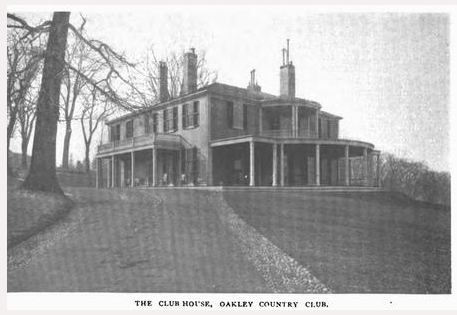
A quick aside. Harrison Gray Otis was a member of a patriotic Massachusetts family - his uncle was the fiery James Otis, one of the early activists against British rule, and his aunt was Mercy Otis Warren who lived with her husband Provincial Council President  James Warren in the Fowle House in Watertown during part of the Revolutionary War. As you know, I grew up in Watertown. Harrison Gray Otis bought Strawberry Hill in Watertown in the early 1800s as a summer home. Strawberry Hill was the highest point in Watertown. His mansion - Oakleigh - which Charles Bullfinch designed - eventually became the Oakley Country Club. See, life indeed goes in circles - everything is related in some way.

  1. But back to Mission Church. "Following the American Revolution, immigration from European countries with strong Catholic heritages began to reduce the Protestant stronghold in Boston. Importing their faith, these immigrants greatly increased the Catholic demographic of the city ... On April 4th, 1808, Jean Lefebvre de Cheverus was named the first Catholic bishop of Boston, an event that marked remarkable progress for a religion that, only decades earlier, was strictly forbidden in the colony of Massachusetts."

    Another quick aside - Bishop Chevrus founded the Ursuline convent in Charlestown that we just read was set on fire by the Know Nothing party which was anti-Catholic, anti-Irish, anti-immigrant.

    "The end of the War of 1812 precipitated a building boom in Boston in the 1820s. This construction activity employed numerous Irish immigrants, greatly expanding the Catholic population. The Irish Potato Famine of the 1840s also contributed to the increasing Catholic population of the city. 1846 saw the construction of St. Joseph's, the first Catholic church in Roxbury. By 1874, the Catholic population had so escalated that Boston was named an Archdiocese."

    (St. Joseph Church, school, convent, and rectory were added to the National Register of Historic Places in 1989 and sold by the Archdiocese in 2002.)

    The website - https://www.bostonsbasilica.com/redemptorists - explains that St. Alphonsus Liguori founded the Congregation of the Most Holy Redeemer (Redemptorists) in Naples, Italy in 1732.  He set their mission as following the example of Jesus in preaching the Gospel to the poor - particularly to those on the margins of society.  "He knew how to reach ordinary people who had limited education and very real needs. They followed this gifted preacher from church to church and town to town to hear him preach the message of hope in Christ for all people ... In 1832 six Redemptorist missionaries traveled to the United States to open the first mission outside of Europe.

    "Within the mission of the religious order, a strong Marian connection is always present. St Alphonsus wrote many beautiful songs, litanies, and painted images of Mary. In 1866, Pope Pius IX entrusted the icon of Our Lady of Perpetual Help to the Redemptorists with the order 'to  make her known.' In fulfilling this mission, the order has faithfully promoted devotion to Mary through novenas, preaching, and venerating her image across the world. The icon is one of the most recognized Marian images."

    The Redemptorists purchased the former Dachet estate in 1869 - the missionaries lived in the old house and built a wooden church on the east side of the building. The Redemptorists carried out an itinerant ministry throughout the area. 

    On Pentecost Sunday - 28 May 1871 - the picture of Our Lady of Perpetual Succor which was given to the Redemptorists by Pope Pius IX was "solemnly enthroned over the high altar. It was carried in procession from the house to the church amidst an immense concourse of people" according to the American Catholic Historical Society.


    My aunt Hannie used to have a good size picture of Our Lady of Perpetual Help that was probably Ma's - it was up in the attic on Green Street in the closet between the 2 bedrooms. I don't know what happened to it. 

  2. I always loved that picture which surprises me sometimes as it is a Byzantine icon. I am not very creative - I am very concrete - so the fact that this painting/icon is out of proportion and size is not something I thought I would like. And I love the story behind it. I have a brochure from Mission Church that explains that the icon comes from an unknown artist of the East. "Some say that the artist of the ancient and original picture was St. Luke ... In eastern art, the Story being told by the painting was more important that the dimensions of the people or objects in it. Notice the size of the Blessed Mother and the Infant; and the tiny angels in the corners ... The icon is telling us a story - not showing us a photograph. It is the story of the two angels appearing to a small child with the instruments of the passion. A story of a frightened child who looks to a place to run. A story of a child who runs straight to his mother. A child who runs right out of his shoes - notice the sandal hanging by one strap."
  3.  
  4. The history of the icon is fascinating. It was stolen by a merchant from the island of Crete - the merchant hoped to make a profit on it. The picture had a reputation for miracles and a history that took it back to the ancient city of Constantinople - now Istanbul, Turkey. The merchant died without selling it. His family presented it to the Augustinians. Their Church of St. Matthew was built on Esquiline Hill in Rome. In 1798 a French army was invading Rome - the French general ordered St. Matthew's to be blown up as a warning to the people. The Augustinians managed to save the icon and other prized possessions. 
  5. In the 1840s Brother Augustine Orsetti came to the Augustinian Church of Santa Maria in Posterula - a section of Rome. He found the icon in the chapel of the monks of Posterula. He trained the altar servers and often told Michael Marchi that the icon was very old and used to hang in St. Matthew's Church. 
  6. The Redemptorists purchased property on Esquiline hill in 1853 to build a Mother House - no one knew that St Matthew's Church used to stand on this property. In 1855 Michael Marchi joined the Redemptorists. In 1862 Jesuit Francis Blosi was preaching around Rome about a famous and lost icon of Mary. Michael Marchi recognized the story and told his Redemptorist brothers the story he had heard years before in the Church of Santa Maria in Posterula. In December 1865 Pope Pius IX heard the story and ordered that the icon be retrieved from Santa Maria in Posterula and returned to the place where it was honored for so many years in the old St. Matthew's Church. It was presented to the Redemptorists and was carried in solemn procession to the Church of St. Alphonsus built in the area where St. Matthew's used to stand.
  1. Back to our story. The congregation at the first Mission Church soon outgrew the wooden church. The cornerstone for the present church was laid in 1875 and blessed by Cardinal Williams the following year - Reverend Healy came from Portland, Maine to preach. Unfortunately that night, after the joyful celebrations, the old house/rectory caught on fire - two thirds of it were destroyed. But work on the new church continued. On 7 April 1878 Archbishop Williams blessed the completed church. The Redemptorists went on to build a new rectory, a convent, a school, and a parish hall. St. Alphonsus Hall contained a library, a gymnasium, a pool hall, bowling alleys, and a theatre for the use of the local youth. 


    I remember when I was in grade school at St. Patrick's in Watertown our class went by chartered bus to St. Alphonsus Hall to see the Passion Play - Pilate's Daughter - which was written by a Redemptorist priest. I can't remember if students or adults were in it, but I was terrified of the thunder and lightning during the Crucifixion. The photos below are from the City of Boston study re the Mission Church complex being designated an historic landmark.

    I remember my mother and especially my aunt Hannie talking about going to Novenas at Mission Church on Wednesday evenings - the upper and lower church would be packed. I am including part of an email that I sent to my family in June 2009 after Hannie and I made a trip to Mission Hill.

    "We went down Washington Street in Brighton to Boylston Street/Rte 9 and over past Brigham Circle. We parked at the corner of Tremont St and Burney St - Aunt Mary Walsh lived on Burney Street but Hannie did not think it looked very familiar. Christine and Jody, we were there years ago with Mum - it seems cleaned up since that trip. Hannie recognized the Library which is beside the Mission Hill park - she thinks Aunt Catherine might have taken her there. We walked thru the park - there was a nice breeze and we were looking at the Prudential and John Hancock buildings as well as the kids playing on the slide, etc."

    "The church bells started ringing as we were walking into the church - Hannie said they were welcoming us. Mass was just starting - the Church was practically empty. We walked quietly down the side aisle to the altar where all the crutches are. We wanted to light candles but were afraid the coins going into the box would make too much noise!!! Hannie didn't want to stay for Mass so we left. We were wondering if Ma had been married at the main altar or a side altar or somewhere else in the church. Weddings weren't the big production they are now. Ma was married from Aunt Mary's according to my mother."

    Aunt Mary and Jeremiah Walsh were living at 117 Smith Street in 1918 - that is behind Mission Church. Pretty convenient!

    "Hannie was talking about going to Mission Church on Wednesday nights to hear Fr Manton with Mary Blackburn and Virginia on the trolley. Then Norman would drive them and Eddie Wallace and Jimmy Dorsey. They would get seats downstairs so they could all sit together - there were loud speakers piping in Fr Manton's talk. She said the church was packed. I didn't remember that Norman was baptised there - Hannie couldn't remember if it was Fr Manton who baptised him - it would be interesting to get his baptismal record."

    My father and mother were sponsors for Norman's baptism - Hannie said that she was not allowed to go into the church for the ceremony.  This was before they got married. She said that Norman converted after attending all the novenas and hearing Father Manton speak. I don't think he told Hannie that he was going to classes - he surprised her. 

    By the way, after the Novenas, they would all go out to Pat Lynch's for drinks! Below is the Boston City Directory for 1946 - it lists Patrick (Sally) Lynch rest(aurant) 278B Tremont, h(ouse) do (same). I couldn't find any information about or pictures of Pat Lynch's although that street number is closer to #247 - the Wang Theater rather than to Mission Church. I couldn't find any street directories listing it after 1953.


    But back to Mission Church. Way back in 1979 I wrote to Mission Church asking for information about it. That's right - I wrote - no computers or emails at that time. I received a lovely letter from Father James Foley. 

    "Dear Mary Ellen,
    My letter is long overdue, please forgive me for not writing sooner. I am involved with the Fund Raising Drive for the Restoration of the Shrine, and you see Mary Ellen, that this effort takes up much of my time. I am afraid to admit it, but my personal mail suffers from this and it shows. Please forgive me.
    I certainly have to agree with you, the Shrine is beautiful. Now that you have seen the interior, you have an idea of why I feel it is important that we restore and preserve what beauty there is. We had begun some repairs last year, but had to stop because of lack of funds. Once again, we are asking devotees of Our Mother of Perpetual Help to assist us in raising $500,000 to restore the shrine dedicated in her honor.
    "I am sending you a copy of Father Manton's book, Boston's Beautiful Basilica. I hope that you enjoy reading it, I'm sure that a lot of your questions concerning the Shrine will be answered after reading this book. Don't let the size of the book deceive you - it is a fountain of information!
    "May Almighty God bless you and Our Dear Lady of Perpetual Help keep you in her care always.
    "Sincerely,
    Father James F. Foley CSSR
    V. Rev. James F. Foley, C.S.S.R.
    Rector and Pastor
    June 25, 1979


    Here is the booklet:


    The booklet explains that 1954 was a Marian year. On 8 December of that year - the feast of the Immaculate Conception, his Holiness Pope Pius XII through the intercessions of Boston's Richard Cardinal Cushing raised Mission Church to a Basilica. To become a Basilica a church must have 1) imposing architecture, 2) impressive crowds of worshippers, 3) an important spiritual treasure - Mission Church has the shrine to Our Lady of Perpetual Help where miracles have taken place.
    Only the Pope can designate a church a basilica and then it becomes the Pope's church. Custom requires that an ornate Umbrella of red and gold be always kept half-open in the church as a sign that the priests and people are ever eager to welcome His Holiness should he come. Then he would be escorted into the church with the umbrella held over him.
    At the opposite end of the sanctuary stands the portable Belfry - a graceful frame of gilded wood mounted on a staff covered with wine-colored velvet. In the center swings a tiny bell whose thin note symbolically summons the faithful to meet the approaching Pope."

    1954 Richard Cardinal Cushing on left - the Pope's Umbrella being carried during a ceremony dedicating Mission Church as a Basilica. 

    The booklet also mentions that right above St. Patrick's altar is the enlargement of an Irish air mail stamp! I mentioned this in that June 2009 email about the trip I took with Hannie to Mission Church:

    "I saw the umbrella which signifies it is a cathedral - can't remember seeing that at St. Peter's. Next time we go I want to look for the large Irish postage stamp that is supposed to be over or near St. Patrick's altar."

    I had also mentioned seeing the shrine with all the crutches. According to the City of Boston study, " The sacred image of Our Lady of Perpetual Help, a duplicate of the painting in the church of Saint Alphonsus in Rome, has been attributed with countless miraculous cures. Shortly after the painting was enshrined in the Mission Church in May of 1871, a young girl with an ankle injury was reportedly healed after her mother offered a novena. So many incidents of this nature were reported that the new church became know as the 'Home of Wonders.' Between 1878, when the church was opened, and 1884, over 330 cures were documented.

    This reminds me of Father Edward McDonough who was a Remptorist priest known as the healing priest. He held regular healing services at Mission Church and around the Boston archdiocese. My sister Christine said that my mother used to listen to him on the radio. When he started coming to Sacred Heart Church in Watertown, she started going to the services. My father went a few times. After my father died, Christine said my mother kept going - it helped her get over his death.
    My aunt Rita Keohane Walsh was diagnosed with advanced breast cancer. I was with her when she went to Dana Farber as a last resort, but they told her that they had nothing to offer her except to participate in a clinical trial in which she might get medication but could be the one who received a placebo. Rita said she wanted something to cure her not a placebo. Sometime after that she went to Sacred Heart Church with my mother to a healing service. When it was her turn, Father McDonough placed his hands on her head or shoulders. Rita said she felt energy pass through her, and she lost consciousness momentarily. She was not cured physically in the end but had had a spiritual experience. 

    I was visiting Mission Church in the late 70s/early 80s - probably with my mother and/or my sisters when we met Father McDonough. He blessed us as he was coming out of the church.  I could tell he was a holy man. 

    One more aside: My father always listened to WROL's Irish Hit Parade on Saturdays - Johnny Murphy always listened to it as well - my son Mike and I still listen to it on Saturdays and Sundays. At noon on Saturdays they always played the Angelus with Father McDonough - even after he had been dead for years!!

    But back to Ma and John Keohane! We don't know exactly where in Mission Church they were married - at the main altar or at a side chapel. Perhaps someone at the Church might know where marriages were celebrated in the early 1900s. Another reason for a road trip back to the Church!

    Below are pictures I took during a trip to Mission Church in May 1979. The plaque in the picture below states: "The Basilica of our Lady of Perpetual Help was begun in 1874 for the rapidly growing Mission Church. Catholics from all over Boston were drawn to hear the popular speakers and participate in the rich pageantry which became a tradition. The Basilica, the only one in New England, is an excellent example of Medieval Romanesque architecture.
    "The Mission Church was founded at the request of Father Robert Healy, who when he later became a prelate, was probably the first black Catholic Bishop in America." I believe the plaque is incorrect - it was Reverend James Augustine Healy who suggested that the Redemptorists found a mission in Roxbury.


    Way back in 2005 I obtained a certified marriage certificate from the city of Boston. It states that the marriage is number 6012 - it took place on September 24, 1918 in Boston. John Keohane resides in Boston! He is 28 years old - he is white - this is his first marriage He is a motorman for the BERR (Boston Elevated Railway.) He was born in Ireland. His parents were Patrick Keohane and Hannah Kiely.
    Margaret Moriarty is residing in North Scituate! She is 25 years old - she is white - this is her first marriage. She is a domestic servant. She was born in Ireland - her parents were Myles Moriarty and Ellen Leary. 
    T. A. McDonnell, priest, of Boston performed the ceremony. It was recorded October 9, 1918. 
    I used the original certified copy of the marriage certificate to obtain my Irish citizenship then gave it to my sister Patty to obtain hers. I did keep a copy of it.

    ***insert copy

    Just recently I came across the marriage certificate on www.familysearch.org. It states Marriages Registered in the City of Boston For The Year 1918. Line 6012 for September 24 gives the same information as the certified marriage certificate EXCEPT it says that John Keohane resides at 49 Brackett Street! This is news! It also gives the full name of the priest - Timothy A. McDonnell. 


    I did a half hearted search for information or a picture of Reverend McDonnell. All I came up with was a picture of the Redemptorists at Mission Church in 1900. I found it on https://www.thebostonpilot.com/article.asp?ID=185705

    I wonder if any of these could be Father Timothy McDonnell?

    What interests me more is John Keohane living on Brackett Street - that is in Oak Square. When I was at Boston College, I had classmates who rented apartments on Brackett Street.
    Below the red icon shows Brackett Street - top right shows the Kiki Mart - this is for my family. 


    Below, shows the location of Brackett Street to Oak Square for everyone else!

    Below is the street view of Brackett Street - the brick building on the left is #51 - the white triple decker has #47 on it - the blue house is #43. So #49 may be the white triple decker. This is very close to the old VFW Hall where my sisters Christine and Joanne and I spent many hours at dances - and I have to admit we did some drinking there as well!


    So in 1917 John Keohane was living and working at McLean's Hospital in Belmont. By September 1918 he began work at the Boston Elevated Railway, moved to Brackett Street, and got married!! What a year!!

    I couldn't find any information for Ma who was residing in North Scituate.

    The marriage certificate from Mission Church listed Nellie Moriarty and Martin McHugh as witnesses. Nellie Moriarty was Ma's older sister. We have seen that Nellie first left Sneem in 1907 when she was 16 years old. At some point she returned to Sneem for a holiday. Unfortunately, when she wasn't able to pass the physical, she wasn't able to return to Boston. 

    An aside: I just today - 9 July 2021 - found a Declaration of Intention for Ellen Moriarty - I attached it to the blog about her and need to go back and update the blog. It states that she is a 33 year old domestic - she was born in Sneemi Co. Kerry. But I knew it was our Aunt Nellie Moriarty when I read that she resides at 10 Faxon Street in Roxbury! That is where Aunt Catherine Moriarty and her husband Timothy Cronin lived! Nellie signed the Declaration on 25 November 1924 - so she was in Boston until 1924 before going home and then not being able to return to the United States.


    My mother said that her parents had their wedding reception in an apartment that they had rented in Newton Corner. I did find a 1919 Newton City Directory that listed John Keohane (Margaret) motorman, h(ouse) 296 Wash(ington Street.)

    I looked for 296 Washington Street in Newton - Uno's Chicago Grille Restaurant is in the 275 Washington Street area. I guess that would make # 296 across the street where the Sheraton Hotel is or perhaps on the other side of the Turnpike? The red icon shows #296 - not too far from Galen Street leading into Watertown so John Keohane could easily walk to work at the Watertown Car Barn. Or perhaps there was a trolley down Galen Street that early.


    I had emailed the Newton Historical Society in 2008 to see if they had any old pictures of Newton Corner before the Mass Pike was built. Susan Abele emailed back that they did have photos of the old Newton Corner - I just had to make an appointment to see them. It is now 2021, and I still haven't gotten there! That is still on my to do list!


    Below is a picture of Newton Corner looking toward Galen Street before the Massachusetts Turnpike was built. It is from Newton Villages Alliance who are trying to restore Newton Corner to some semblance of what it looked like before the Pike destroyed the area - http://www.newtonvillagesalliance.org/newton-corner.html


    Here are some other views of Newton Corner pre Turnpike from https://www.digitalcommonwealth.org/search/commonwealth:ng451x56b.

    I think Ma and John Keohane lived somewhere in this picture!


    This picture is almost the same as the one above but it shows a movie theater - I remember going to the theater in Newton Corner to see Young Frankenstein.


    I remember walking to Newton Corner in High School in the late 1960s with Susan Cook who lived on the corner of Galen Street and Capitol Street. We would walk up to do errands for her mother. I vaguely remember thinking how old some of the stores were.

    Below is just one of many homes and businesses demolished to make way for the Massachusetts Turnpike. I vaguely remember hearing or reading about the problem of eminent domain - no one ever spoke of it except in horror that it was possible for the state to take a person's land with no recourse for the owner. And it was happening to so many families and businesses along the entire length of the Pike! It was probably the first time I had heard that term - it has left a dirty taste in my mouth since that time. 


    "Homes and businesses that generations of families had built together were to be obliterated, and they were notified by a straightforward letter in the mail from the Turnpike Authority. Business owners were given only two months to close up shop and move elsewhere, and homeowners were given just four months to relocate.

    To facilitate a speedy transition of ownership, property owners were forced to move out first and negotiate a price after it was no longer theirs. The Turnpike Authority was taking advantage of its tremendous power to bilk people out of the fair value of their homes."

    How many times have we driven through Newton Corner to jump on the Pike or to cut over to Centre Street. I have stayed several times in that hotel over the Pike close to where Ma and John Keohane would have lived.

    I have one more aside to this story. As sad it was for all the businesses and homes that were destroyed by the Mass Pike, I do have happy memories of my family driving on the Mass Pike under the Prudential Tower heading into Boston and yelling "Hi Chris!" to my cousin Chris Navin who was working at the Top of The Hub at the top of the Prudential Building. Like he could hear us!!

    My mother said that years later on her wedding anniversary, Jim, Hannie, and my mother took Ma out to dinner  - maybe to Dini's near the Parker House. Next they went to Mission Church and then to Aunt Catherine's - she lived across the street from Mission Church.

    Above is the interior of Dini's and below is part of a Dini menu. Both are from the website - 

    https://www.worthpoint.com/worthopedia/dinis-seafood-grill-restaurant-menu-1755125434


    this gifted preacher from church to church and town to town to hear him preach the message of hope in Christ for all people.


St. Alphonsus Liguori founded the Congregation of the Most Holy Redeemer (Redemptorists) in Naples, Italy in 1732. The original mission as set forth by St. Alphonsus was to strive to follow the example of Jesus Christ in preaching the Gospel to the poor, particularly to those who live on the margins of society.

St. Alphonsus Liguori founded the Congregation of the Most Holy Redeemer (Redemptorists) in Naples, Italy in 1732. The original mission as set forth by St. Alphonsus was to strive to follow the example of Jesus Christ in preaching the Gospel to the poor, particularly to those who live on the margins of society.

St. Alphonsus Liguori founded the Congregation of the Most Holy Redeemer (Redemptorists) in Naples, Italy in 1732. The original mission as set forth by St. Alphonsus was to strive to follow the example of Jesus Christ in preaching the Gospel to the poor, particularly to those who live on the margins of society.